Between : Living in the Hyphen

Collaborateurs : McCrea, Graydon | Nakagawa, Anne Marie | Thompson, Bonnie | Office national du film du Canada

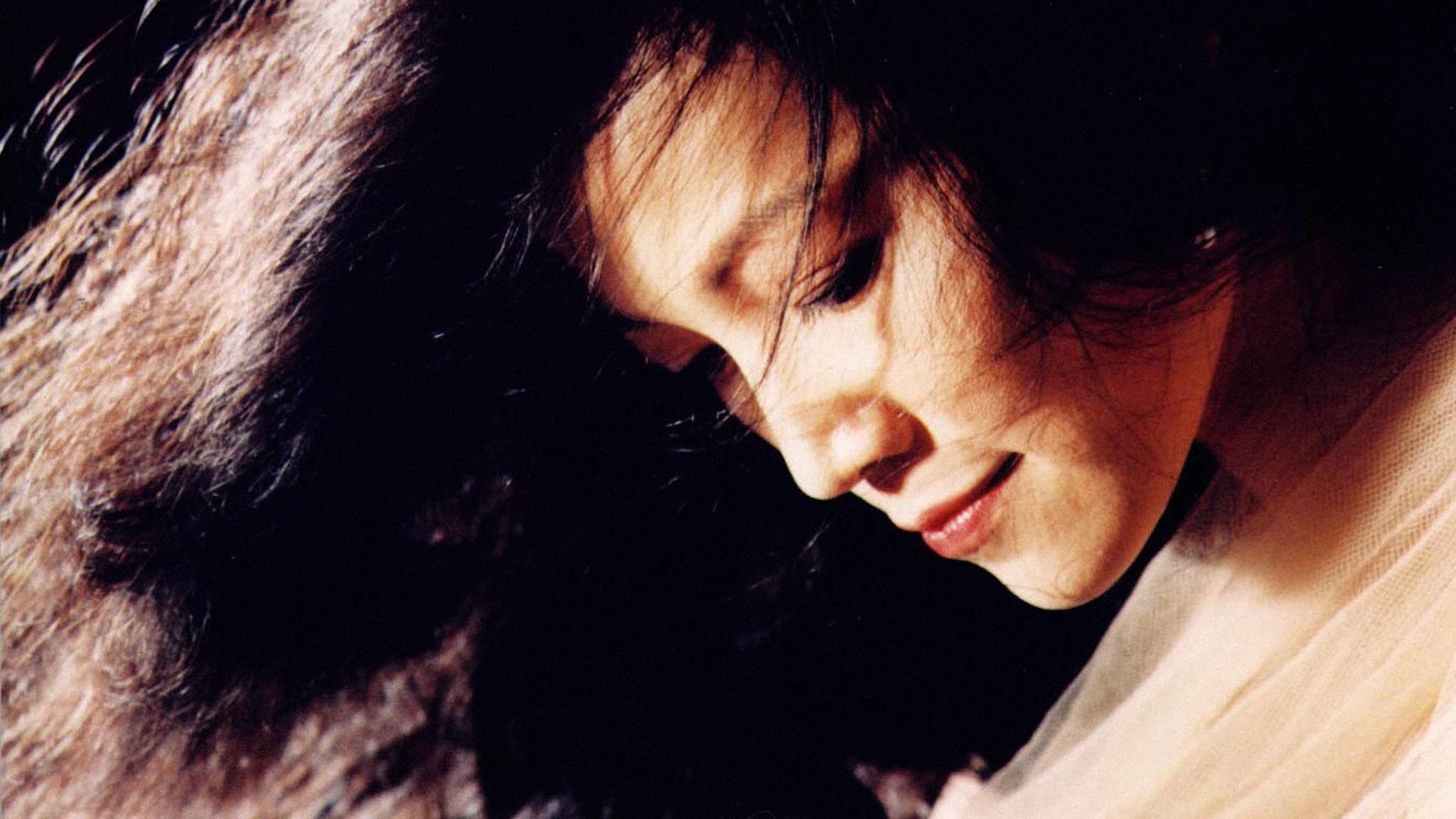
In Canada, diversity often means "one ethnicity + hyphen + Canadian," but what if you don't fit into an easy category? What if your background is a hybrid of ancestries and you live somewhere between, where cultural identities overlap? Between interweaves the experiences of a group of Canadians with one parent from a European background and one from a visible minority. They're all struggling to find a satisfying frame of reference. Cultural identity, it seems, is more complex than what our multicultural utopia implies. Seven individuals share stories of being multi-ethnic in a world that wants to put each person into a single category. Among them are award-winning poet Fred Wah, who recalls being told by his elementary teacher that he was Chinese, even though his background also includes Irish, Scottish and Swedish ancestry. When visiting China, however, he finds that he is not accepted as Chinese because he is mixed. Shannon Waters, who is half-Coast Salish, is questioned for participating in the First Nations Family Practice program. Although she chooses to identify with her Indigenous ancestry, her connection with that background is challenged because of her appearance. The thought-provoking experiences of these Canadians come to life against an innovative visual landscape and soundscape. Filmmaker Anne Marie Nakagawa, drawing on her work as a multimedia artist, creates a stylistic documentary that plays with form. As globalization increasingly blurs borders, Between offers a provocative glimpse of what the future holds: a movement away from hyphens and "pure" bloodlines, towards a celebration of fluidity, hybridity and being mixed.


Résultats de la recherche

Découvrir des ressources similaires

Image représentant la ressource: Race Is a Four-Letter Word

Race Is a Four-Letter Word

Speaking biologically, 'race' is a spectral concept. Black, brown, red, white, and yellow, considered purely as skin colours, merit no more significance than a tattoo. The 'skin your're in' is about as meaningful as ectoplasm. Scientists remind us that not only are we all essentially the same, but we all have the same genetic ancestor. Eve was a black, African woman. Nevertheless, history and politics, sociology and economics, transform skin colour - 'race' - into either a golden sheathe or a leaden prison of shame. In Europe and North America, blackness can still seem a burden. It can still brand its possessors as uncivilized, exotic, and menacing. But it can also be prized, lusted after and viewed as a precious enhancement, like gold foil. In Race Is a Four-Letter Word, director Sobaz Benjamin highlights Canadian contradictions and conflicts around race. Heroically, he exposes himself, too: a black man who grew up hating himself, trying to bleach his skin with chemicals, and then struggling to appreciate the meaning of his culture and heritage as an 'Afro-Saxon' Briton, then Grenadian and now Haligonian-Nova Scotian-Canadian. Courageously, Benjamin strips away the masks and armour of race, of blackness and whiteness, to reveal the vulnerable and human, including that very sex that inspires so much primal envy and dread. This brave film forces us to unmask and to look unflinchingly at our real selves. Sobaz Benjamin showcases the stories of a white man who is culturally and psychologically black; of a black woman who wants to be considered iconically Canadian; of another black woman who retreats to England rather than continue to face Canada's racial cold war; and of himself, a black man who has learned to love his complexity. In the end, Race Is a Four-Letter Word teaches us that the soul has no colour. Yet, we also learn that race is a marathon we are all forced to run. Race Is a Four-Letter Word was produced as part of the Reel Diversity Competition for emerging filmmakers of colour. Reel Diversity is a National Film Board of Canada initiative in partnership with CBC Newsworld.

Années scolaires : 3e secondaire | 4e secondaire | 5e secondaire