Reel Injun

Collaborateurs : Bainbridge, Catherine | Diamond, Neil | Din, Ravida | Fon, Christina | Hayes, Jeremiah | Ludwick, Linda | Olsen, Catherine | Symansky, Adam | Webb, Ernest | Office national du film du Canada | Rezolution Pictures Inc. (Outremont)

Cree filmmaker Neil Diamond takes an entertaining and insightful look at the "Hollywood Indian", exploring the portrayal of North American Indigenous peoples through a century of cinema. Traveling through the heartland of America, and into the Canadian North, Diamond looks at how the myth of "the Injun" has influenced the world's understanding - and misunderstanding - of Indigenous peoples. Reel Injun traces the evolution of cinema's depiction of Indigenous people from the silent film era to today, with clips from hundreds of classic and recent Hollywood movies, and candid interviews with celebrated Indigenous and non-Indigenous film celebrities, activists, film critics and historians. Diamond meets with Clint Eastwood (The Good, the Bad and the Ugly, A Fistful of Dollars, Unforgiven) at his studios in Burbank, California, where the film legend discusses the evolution of the image of "Indians" in Westerns and what cowboy-and-Indian myths mean to America. Reel Injun also hears from legendary Native American activists John Trudell, Russell Means and Sacheen Littlefeather. Celebrities featured in Reel Injun include Robbie Robertson, the half-Jewish, half-Mohawk musician and soundtrack composer (Raging Bull, Casino, Gangs of New York), Cherokee actor Wes Studi (Last of the Mohicans, Geronimo), filmmakers Jim Jarmusch (Dead Man) and Chris Eyre (Smoke Signals) and acclaimed Indigenous actors Graham Greene (Dances with Wolves, Thunderheart) and Adam Beach (Smoke Signals, Clint Eastwood's Flags of our Fathers). Diamond also travels North to the remote Nunavut town of Igloolik (population: 1500) to interview Zacharias Kunuk, director of the Caméra d'or-winning The Fast Runner. Reel Injun's humour and star power is balanced with insightful commentary from film critics and historians, including CBC film critic Jesse Wente, Angela Aleiss, author and scholar of Native American Studies, and Melinda Micco, associate professor of ethnic studies at Mills College in California. In Reel Injun, Diamond takes the audience on a journey across America to some of cinema's most iconic landscapes, including Monument Valley, the setting for Hollywood's greatest Westerns, and the Black Hills of South Dakota, home to Crazy Horse and countless movie legends. Was Crazy Horse the inspiration for the mystical warrior stereotype? In search of answers, we meet his descendants on the desperately poor Pine Ridge Indian reservation in South Dakota. Reel Injun traces the evolution of cinema's depiction of Indigenous people from the silent film era to today, only to find the future of Indigenous cinema in the unlikeliest of places - Canada's North. It's a loving look at cinema through the eyes of the people who appeared in its very first flickering images and have survived to tell their stories their own way.

Années scolaires
Secondaire
3e secondaire | 4e secondaire | 5e secondaire
Résultats de la recherche

Découvrir des ressources similaires

Image représentant la ressource: Hollywood et les indiens

Hollywood et les indiens

Le cinéaste cri Neil Diamond pose un regard perspicace et plein d'esprit sur l'Indien d'Hollywood et explore la représentation des Autochtones d'Amérique du Nord à travers un siècle de cinéma. En voyageant au coeur de l'Amérique, et dans le Nord canadien, Diamond explore la façon dont le mythe de l'«Injun» a modelé notre compréhension et notre incompréhension des Autochtones. Hollywood et les indiens retrace l'évolution de l'image des Premières nations au cinéma, de l'époque des films muets jusqu'à nos jours, en présentant des extraits de films classiques et récents, ainsi que des entrevues franches et instructives avec de célèbres cinéastes, scénaristes et acteurs autochtones et non autochtones. Diamond rencontre Clint Eastwood (Le bon, la brute et le truand, Pour une poignée de dollars, Impitoyable) dans ses studios de Burbank en Californie, où la légende du cinéma parle de l'évolution de l'image des Indiens dans les westerns et de la signification du mythe des cowboys et des Indiens pour l'Amérique. Hollywood et les indiens nous permet aussi d'entendre les propos de légendaires militants autochtones tels que John Trudell, Russell Means et Sacheen Littlefeather. Parmi les célébrités figurant dans Hollywood et les indiens, mentionnons Robbie Robertson, musicien et compositeur de bande sonore d'origine juive et mohawk (Raging Bull, Casino, Gangs of new York), l'acteur cherokee Wes Studi (Le Dernier des Mohicans, Geronimo), les cinéastes Jim Jarmusch (Dead Man) et Chris Eyre (Phoenix, Arizona) et les acteurs autochtones acclamés Graham Greene (Danse avec les loups, Coeur de tonnerre) et Adam Beach (Phoenix, Arizona, Mémoires de nos pères de Clint Eastwood). Diamond s'est aussi rendu dans le Nord, à Igloolik, ville isolée du Nunavut comptant 1500 habitants, où il a interviewé Zacharias Kunuk, réalisateur du film Atanarjuat, la légende de l'homme rapide, lauréat de la Caméra d'or. Des critiques de cinéma et des historiens, dont le critique de CBC Jesse Wente, l'auteure et érudite de l'American Indian Studies, Angela Aleiss, et la professeure agrégée en études ethniques du Mills College en Californie, Melinda Micco, apportent un contrepoids à l'humour et à la prestigieuse distribution du film par leurs commentaires pénétrants. Dans Hollywood et les indiens, Diamond sillonne l'Amérique et entraîne le spectateur vers certains des paysages les plus emblématiques du cinéma, notamment Monument Valley, où ont été tournés les plus grands westerns d'Hollywood, et les Black Hills du Dakota du Sud, pays natal de Crazy Horse et berceau d'innombrables légendes du grand écran. D'ailleurs, Crazy Horse a-t-il inspiré le stéréotype du guerrier mythique? À la recherche de réponses, nous avons rencontré ses descendants dans la réserve indienne Pine Ridge du Dakota du Sud, où règne une pauvreté extrême. En retraçant l'évolution de l'image des Premières nations au cinéma, de l'époque des films muets jusqu'à nos jours, Neil Diamond découvre que l'avenir du cinéma autochtone réside dans un endroit des plus invraisemblables, à savoir le Nord canadien. Hollywood et les indiens propose un regard bienveillant sur le cinéma à travers les yeux d'un peuple qui est présent au grand écran depuis la projection des premières images papillotantes et qui a survécu pour raconter ses histoires.

Années scolaires : 3e secondaire | 4e secondaire | 5e secondaire
Image représentant la ressource: Mohawk Girls

Mohawk Girls

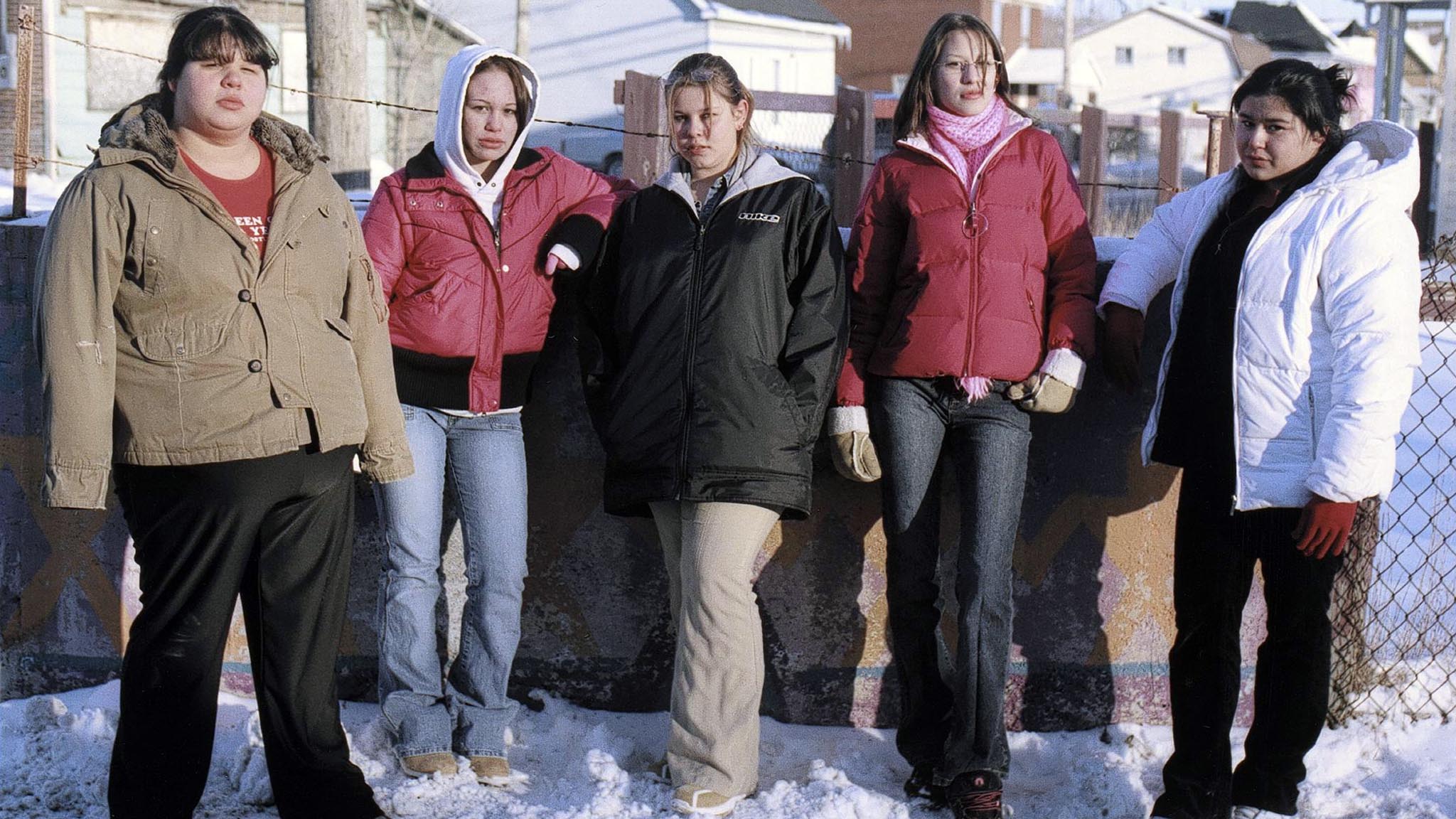
The massive Mercier Bridge looms over the eastern end of the Kahnawake Native reserve carrying commuters into the city of Montreal. For Amy, Lauren and Felicia, three Mohawk teens living in its shadow, the bridge also serves as a constant reminder of the bustling world just beyond the borders of their tiny community. Like typical teenagers, all three are wrestling with critical decisions about their futures. But for these girls, there is more at stake. The rules on the reserve can be strict and unforgiving. Move away and you risk losing your credibility, or worse, your rights as a Mohawk. Stay and you forego untold experiences and opportunities in the "outside world." Like nearly half of the teenagers in Kahnawake, filmmaker Tracey Deer utilized government subsidies to attend private school in Montreal. Vowing never to return, she then left the reserve to attend college in the U.S. Now a graduate of Dartmouth University, she has come home to Kahnawake to play a role in the evolution of her community. With insight, humour and compassion, Deer takes us inside the lives of these three teenagers as they tackle the same issues of identity, culture and family she faced a decade earlier. Like her, they are outspoken, honest and wise beyond their years. Shot over two years, and interspersed with home videos from Deer's own adolescence, Mohawk Girls provides a surprising inside look at modern Aboriginal youth culture. Deeply emotional yet unsentimental, it reveals the hope, despair, heartache and promise of growing up Native at the beginning of the 21st century.

Années scolaires : Adultes 1er cycle | Adultes 2e cycle | 3e secondaire | 4e secondaire | 5e secondaire