Journey to Justice

Collaborators : King-Chigbo, Karen | Lore, Louise | McTair, Roger | Office national du film du Canada

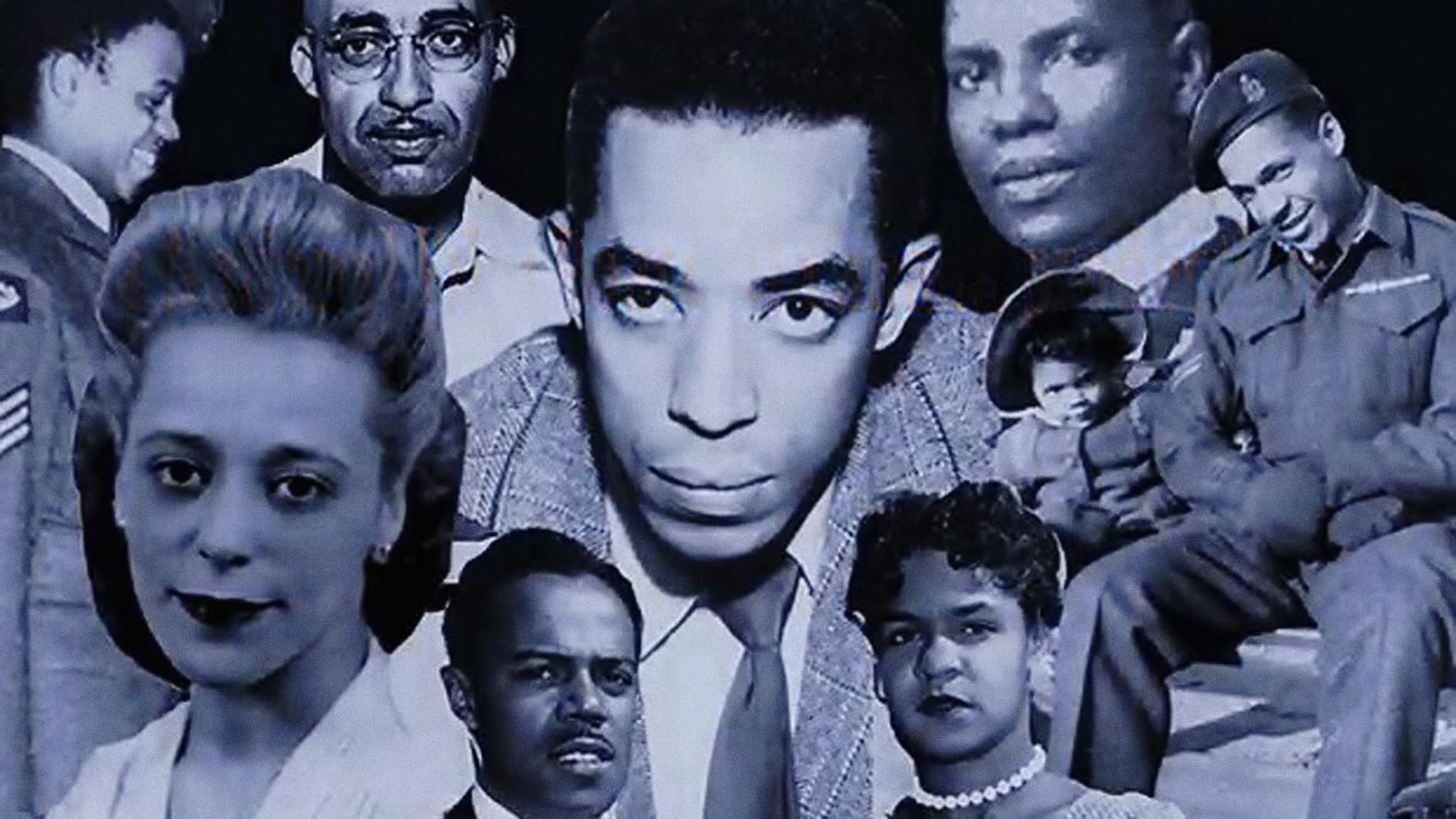
Journey to Justice pays tribute to a group of Canadians who took racism to court. They are Canada's unsung heroes in the fight for Black civil rights. Focusing on the 1930s to the 1950s, this film documents the struggle of six people who refused to accept inequality. Viola Desmond insisted on keeping her seat at the Roseland movie theatre in New Glasgow, Nova Scotia in 1946 rather than moving to the section normally reserved for the city's Black population. Fred Christie was denied service at a Montreal tavern because of his skin colour and took his case to the Supreme Court in 1936. Hugh Burnette and Bromley Armstrong pressured the Ontario government to enact fair accommodation practices in the 1940s. Donald Willard Moore dedicated his life to reforming Canada's biased immigration policy. Stanley G. Grizzle, president of the Toronto Brotherhood of Sleeping Car Porters, worked to ensure fair employment practices for his predominantly Black union members. These brave pioneers helped secure justice for all Canadians. Their stories deserve to be told.

Discover similar resources

Image représentant la ressource: Race Is a Four-Letter Word

Race Is a Four-Letter Word

Speaking biologically, 'race' is a spectral concept. Black, brown, red, white, and yellow, considered purely as skin colours, merit no more significance than a tattoo. The 'skin your're in' is about as meaningful as ectoplasm. Scientists remind us that not only are we all essentially the same, but we all have the same genetic ancestor. Eve was a black, African woman. Nevertheless, history and politics, sociology and economics, transform skin colour - 'race' - into either a golden sheathe or a leaden prison of shame. In Europe and North America, blackness can still seem a burden. It can still brand its possessors as uncivilized, exotic, and menacing. But it can also be prized, lusted after and viewed as a precious enhancement, like gold foil. In Race Is a Four-Letter Word, director Sobaz Benjamin highlights Canadian contradictions and conflicts around race. Heroically, he exposes himself, too: a black man who grew up hating himself, trying to bleach his skin with chemicals, and then struggling to appreciate the meaning of his culture and heritage as an 'Afro-Saxon' Briton, then Grenadian and now Haligonian-Nova Scotian-Canadian. Courageously, Benjamin strips away the masks and armour of race, of blackness and whiteness, to reveal the vulnerable and human, including that very sex that inspires so much primal envy and dread. This brave film forces us to unmask and to look unflinchingly at our real selves. Sobaz Benjamin showcases the stories of a white man who is culturally and psychologically black; of a black woman who wants to be considered iconically Canadian; of another black woman who retreats to England rather than continue to face Canada's racial cold war; and of himself, a black man who has learned to love his complexity. In the end, Race Is a Four-Letter Word teaches us that the soul has no colour. Yet, we also learn that race is a marathon we are all forced to run. Race Is a Four-Letter Word was produced as part of the Reel Diversity Competition for emerging filmmakers of colour. Reel Diversity is a National Film Board of Canada initiative in partnership with CBC Newsworld.

Grade levels : 3e secondaire | 4e secondaire | 5e secondaire